

US Academy Publishes NJU Professor’s Progress Report in Single-Cell Electrochemical Analyses
Academician Chen Hongyuan and his team at the School of Chemistry and Chemical Engineering have made significant progress in single-cell electrochemical analyses, reported in their report in Proceedings of the National Academy of Sciences (PNAS), a top academic journal of the world.
The cell, as the basic unit of life, is the starting point for revealing the secrets of life. It is like a “globe in miniature,” with many interacting components, electron transfer, energy transfer and solute translocation.
The characteristics of cells and information delivery between them should be studied at the level of single cells because with research at the level of cell groups, many characteristics would be hidden due to the complexity of cells themselves and the huge differences between them.
At present, the single-cell analysis system is constructed based on fluorescence analysis. Although the fluorescent probes applied in the analysis system are capable of discerning and pinpointing, they have to be cleverly designed and combined according to target molecules. Even with this method, it is still hard to obtain such molecular information as the chemical activity of protein.
Faced with these technical challenges, the team led by academician Chen Hongyuan put forward in 2012 the plan of developing a new single-cell dynamic analysis system with temporal-spatial resolution which was based on electrochemical analysis combined with optical analysis and mass spectrum analysis. In 2013, this system won the support from the development project of major scientific research instruments of the National Natural Science Foundation of China.
Guided by this thought, the research group led by Associate Professor Jiang Dechen accomplished the design of a new single-cell electrochemical analysis module and constructed a “single cell kit” by inducing a femto-liter (10-15L, or one billionth of the volume of a drop of water) bio-analysis kit into a single cell through electrophoresis. This team also succeeded in analyzing the chemical activity of micro-molecules and protein in a single cell by electrochemically studying resultants, thus expanding the contents of single cell analysis.
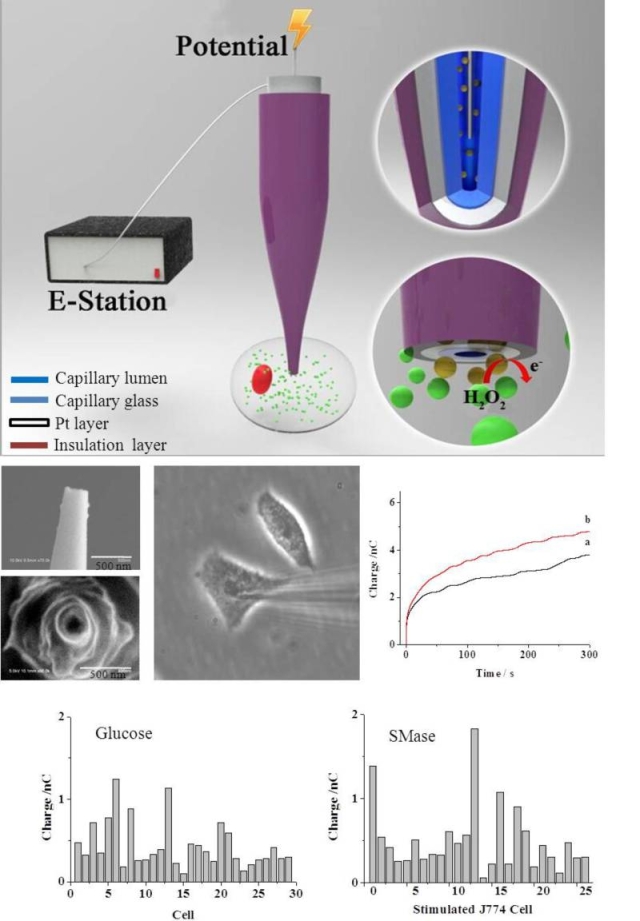
FIGURE 1. Single-cell electrochemical analysis based on the “single cell kit”
(Courtesy of the Department of Science and Technology)
This instrument module contains one glass capillary with a diameter of 100nm, electrophoresis units and electro-analysis units. With the size of the capillary far smaller than that of a single cell of a mammal’s, disturbance to the cell activity caused by pricking the capillary into it to carry out testing can be reduced to the greatest extent. The tip of the capillary is equipped with nm circular electrodes and there are kit components for cell analysis and a metal wire for connecting electrophoresis units inside the capillary.
After the probe is pricked into the cell, the femto-liter kit components are propelled into the cell by the electrophoresis generated by the interior metal wire. Next, the reaction between these kit components and the target cell and protein produces electro-active H2O2 molecules. Then batches of information about micro-molecules (such as glucose) and the activity of protein (such as sphingomyelinase) are obtained through the number of electrons produced by the electro-oxidation of H2O2 on the surface of the nm circular electrodes.
This testing strategy broke the barriers between cell analysis and single-cell analysis through applying the developed bio-monitoring kit, which is used in the research of cell groups, into single-cell analysis, and reduced the difficulty in single-cell testing by using electrochemical analysis methods of not marking cells.
Based on these achievements, this team is continuing to develop successful modules for single-cell optic and mass spectrum analyses so as to make breakthroughs in the single-cell analysis system with temporal-spatial resolution.
First author: Pan Rongrong, graduate student from the School of Chemistry and Chemical Engineering, Nanjing University
Correspondent: Associate Professor Jiang Dechen
This project has been supported by the development project of major scientific research instruments of the National Natural Science Foundation of China and the 973 Project.
(School of Chemistry and Chemical Engineering and the Department of Science and Technology)

